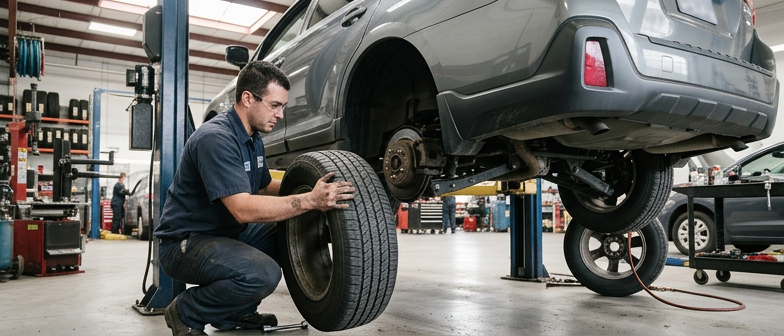
Why Tire Rotation Schedules Matter
A basic tire rotation schedule is one of the simplest ways to keep your vehicle predictable and stable on the road. Because the front and rear positions carry weight and handle braking and steering differently, tires naturally wear at different rates. By moving them around at planned intervals, you encourage more even tire wear instead of letting one or two positions wear out early. This routine also gives you or a technician a regular chance to spot damage, nail punctures, sidewall bulges, or uneven tread patterns that might affect everyday safety. Understanding these tire rotation schedule basics turns a small, occasional task into a practical habit that supports safer driving over time.
Building tire rotation into your routine vehicle maintenance timing makes it easier to stay consistent. Many drivers pair rotations with other mileage-based car care, such as oil changes or brake inspections, so it becomes part of a predictable service rhythm rather than an afterthought. Each visit acts as a safe driving support check, where tread depth, inflation, and overall tire condition are reviewed before problems grow more serious. When you treat rotations as a recurring appointment instead of an emergency fix, you spread wear more evenly, help your tires last closer to their intended life, and keep your car’s handling and stopping performance more reliable from one service interval to the next.
How Often Should You Rotate Your Tires
For most drivers, a simple mileage based car care plan works well: rotate your tires about every 5,000 to 7,500 miles, or roughly every second oil change for many vehicles. This interval fits the tire rotation schedule basics recommended by many manufacturers and helps keep wear patterns even from front to back. Always confirm the suggested timing in your owner’s manual, because trucks, performance models, and vehicles with staggered wheel sizes may have more specific guidance. Treat rotation as part of your routine vehicle maintenance timing so it becomes a habit instead of a one off chore.
Driving style and conditions can justify adjusting that interval as part of practical auto care planning. If you often drive on rough roads, carry heavy loads, tow a trailer, or do a lot of stop and go city driving, tires may wear faster and benefit from rotations nearer the 5,000 mile mark. Gentler highway use may allow you to stretch toward the upper end of the range, as long as tread wear stays even. The key is consistency: pick a realistic schedule, connect it to services you already remember, and have your shop check tread depth and wear patterns at each visit so timing can be fine tuned to your specific vehicle and habits.
| Driving pattern | Suggested rotation end of range | Why timing may change | Extra check to request |
|---|---|---|---|
| Frequent rough or unpaved roads | Closer to shorter interval | Tread can scrub and chip faster | Visual tread and sidewall inspection |
| Regular towing or heavy cargo | Closer to shorter interval | Added load increases wear on driven axle | Tread depth comparison front to rear |
| Stop-and-go city commuting | Closer to shorter interval | More braking and steering on front tires | Check for uneven edge wear |
| Mostly gentle highway cruising | Closer to longer interval | Steady speeds reduce stress on tread | Confirm wear remains even across tires |
| Mixed city and highway use | Middle of suggested range | Wear rate varies with weekly habits | Have shop review wear pattern each visit |
Signs Your Tires Need Rotation Sooner
You may need a tire rotation earlier than planned if simple Safe Driving Support Checks reveal changes. Uneven tread wear, such as deeper tread on the rear tires than the front or more wear on one edge, shows your Even Tire Wear Habits are slipping and the tires are no longer sharing the workload. When one tire looks noticeably more worn than its partner on the same axle, your rotation schedule is probably overdue.
While driving, increasing steering wheel vibration at highway speeds, a droning or humming that changes with road speed, or a car that gently pulls to one side can all point to tires that should be swapped around sooner. Treat these as Wheel Service Awareness Tips: combine a quick pressure and visual inspection with an earlier rotation to restore balanced road contact and predictable handling.
Common Tire Rotation Patterns and What Affects Them
Most passenger vehicles use a few standard tire rotation patterns, and your owner’s manual usually points to the one that best supports even, predictable wear. For many front‑wheel‑drive cars with four identical, non‑directional tires, a common choice is the forward cross pattern, where the front tires move straight back and the rears cross to the front. Rear‑wheel‑drive and some all‑wheel‑drive vehicles often use a rearward cross pattern, sending the rear tires straight to the front and crossing the fronts to the back. These basic approaches are part of tire rotation schedule basics and help keep wear balanced as mileage builds, fitting naturally into planned car care instead of waiting for a problem.
Another option is the X‑pattern, where all four tires swap corners diagonally. This layout can work well on many compact cars and light vehicles and is easy to remember when you think about routine vehicle maintenance timing. Whichever pattern your vehicle calls for, the goal is the same: to spread out the work each tire does under steering, braking, and acceleration so no single position wears out much faster than the others. Building these habits into your practical auto care planning makes it easier to schedule rotations alongside other services such as oil changes or brake inspections.
The right rotation pattern is influenced by several design details, so quick wheel service awareness helps avoid mistakes. Directional tires, which are designed to roll only one way, usually stay on the same side of the vehicle and swap front to rear rather than crossing. Staggered fitments, where the rear tires are wider or a different size than the fronts, can further limit how far you can rotate, and some high‑performance setups may only allow side‑to‑side swaps or require a professional to remount tires. Knowing whether your vehicle is front‑, rear‑, or all‑wheel drive, and checking for directional tread or mixed sizes, keeps your rotation pattern aligned with the vehicle’s design and your overall maintenance plan.
When Professional Rotation Makes Sense
A professional tire rotation is worth considering when your vehicle has staggered wheel sizes, directional tires, a tire pressure monitoring system, or when you simply are not comfortable lifting the car safely. Shops can combine rotation with broader safe driving support checks, such as inspecting tread depth, sidewall condition, valve stems, and torque on the lug nuts. This kind of wheel service awareness helps catch problems like uneven wear, slow leaks, or alignment concerns before they turn into bigger safety issues, and it fits naturally into a practical auto care plan built around your mileage and seasonal visits.
Building Tire Rotation Into Your Overall Car Care Plan
Instead of treating tire rotation as a one-off job, build it into a broader, practical car care plan. Many drivers use mileage based car care, asking for a rotation every 5,000 to 8,000 miles or at every second oil change, so the visit becomes part of routine vehicle maintenance timing. A steady schedule encourages even tire wear habits because the tires are checked and moved regularly, not only when something feels wrong. Adding each visit to a simple written or digital maintenance log also makes it easier to spot patterns in how you drive and adjust the interval if you haul heavy loads or often travel on rough roads.
You can pair each rotation with other safe driving support checks to make the most of every workshop stop. Asking the shop to inspect tread depth, tire pressure, valve stems, wheel balance, and visible suspension or brake issues during the same visit gives you practical wheel service awareness tips without extra appointments. Setting phone reminders, using an in-car maintenance app, or scheduling the next visit before you leave the service counter are all practical auto care planning steps that keep your schedule consistent and your vehicle ready for daily driving.
Q&A
-
What are the basics of a tire rotation schedule?
A tire rotation schedule is a planned pattern and timing for moving each tire to a new wheel position. Because front and rear tires wear differently, rotating them at set intervals helps promote even tread wear and more predictable handling. -
How often should I rotate my tires for mileage-based car care?
Many vehicles do well with a rotation every 5,000 to 7,500 miles, often at every second oil change. Always confirm the recommended interval in your owner’s manual, especially for trucks, sporty models, or vehicles with unique tire setups. -
What signs show my tires need rotation sooner?
Watch for uneven tread depth front to rear, one edge of a tire wearing faster, or one tire on an axle looking more worn than the other. Steering vibration or the car pulling can also suggest your rotation is overdue or alignment is off. -
When should a professional handle tire rotation and checks?
Use professional wheel service if your car has staggered sizes, directional tread, a tire pressure monitoring system, or if lifting the vehicle safely is a concern. Technicians can also inspect tread, sidewalls, and torque during the visit. -
How can I plan rotations in my routine maintenance?
Link rotations to regular service, such as every second oil change, and note them in a maintenance log. This practical habit encourages even wear, supports safer driving, and makes it easier to adjust timing for towing or rough-road use.