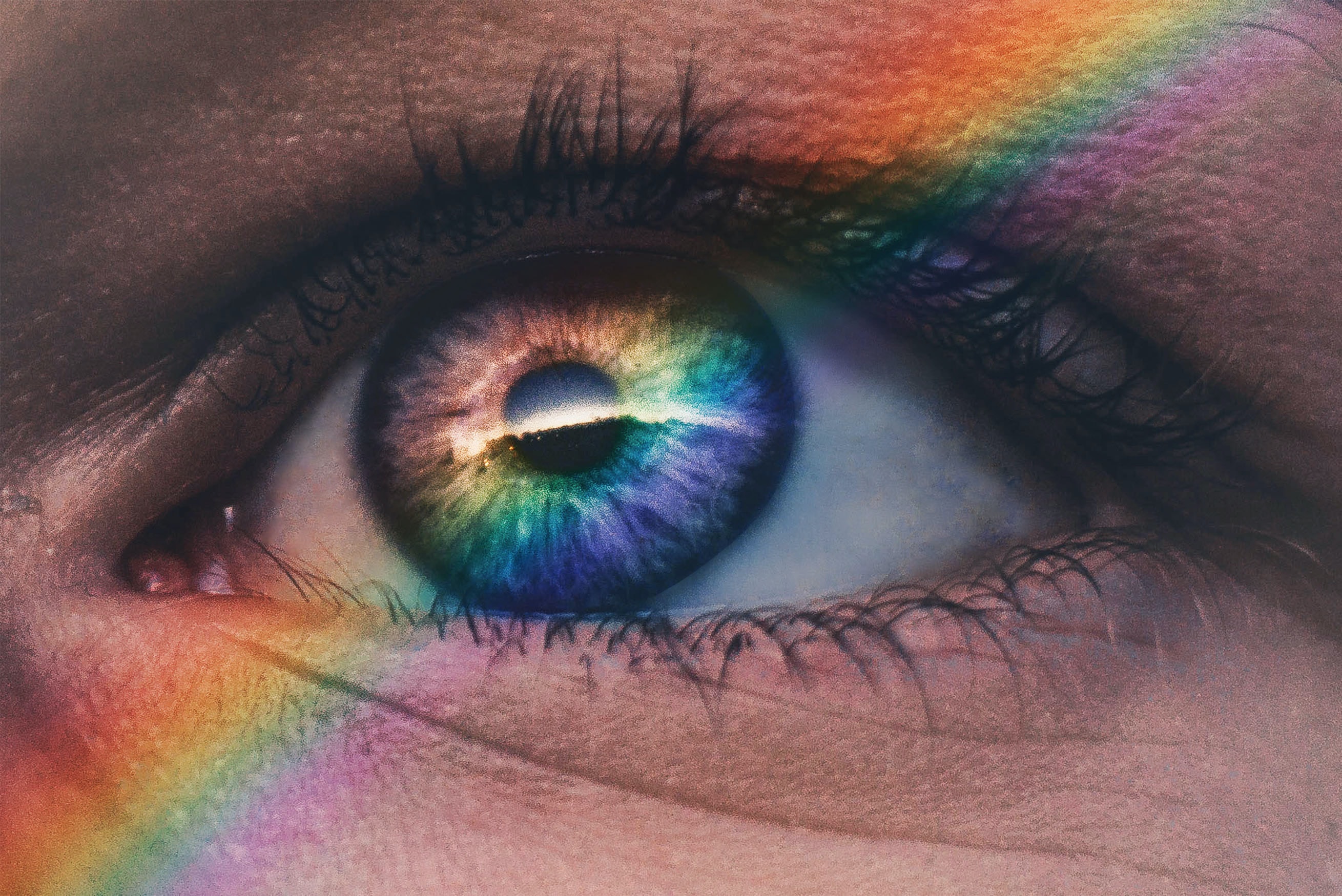
The Dance of Illusions: Exploring How Our Senses Trick Us
In the fascinating realm of psychophysics, illusions are key players that illustrate how our senses can deceive us. These illusions not only captivate our curiosity but also provide deeper insights into the workings of sensory perception.
1. Visual Illusions: Unraveling Optical Tricks
Visual illusions are compelling phenomena where our perception diverges from reality due to the brain's interpretation of visual stimuli. These illusions, such as the Müller-Lyer illusion, where lines of identical lengths appear different due to arrow-like ends, demonstrate how our brains use context and past experience to make sense of the world. This cognitive process can lead to interpretations that do not match the physical world, showcasing the brain's reliance on heuristic shortcuts.
Furthermore, color constancy phenomena highlight how our brains adjust perceived colors to maintain constancy under varying lighting conditions. This adjustment underscores how perception is not a passive reception but an active construction by the brain, aiming for continuity in our ever-changing environment.
2. Auditory Illusions: The Sounds of Perceptual Deception
While less obvious than visual illusions, auditory illusions reveal just as much about perception. The McGurk Effect is a classic illustration where conflicting visual and auditory information causes a third sound to be perceived, highlighting the brain’s integration of multimodal sensory inputs.
Additionally, phenomena like Shepard tones create an auditory illusion of a perpetually ascending or descending pitch, exploiting how our auditory systems process frequency and amplitude. These insights reveal the brain's complex filters that interpret auditory signals and weave them into coherent experiences.
3. Sensory Illusions Beyond Vision and Hearing
Illusions are not confined to sight and sound—they pervade other senses as well, emphasizing general principles of perception. The Rubber Hand Illusion, for instance, can convincingly lead individuals to feel a disembodied rubber hand as part of their own body. This suggests how sensory integration—the merging of visual, tactile, and proprioceptive information—influences the perception of body ownership.
Moreover, temperature illusions exemplify relative perception. A lukewarm stimulus can feel either hot or cold depending on prior exposure to extreme temperatures, highlighting how comparative contexts shape sensory experiences. These examples across different sensory modalities underscore that perception is as much about context and comparison as it is about objective reality.
Psychophysical research encapsulates these diverse illusions, as highlighted in studies from institutions like University College London (UCL), revealing mechanisms behind common visual illusions (data from April 2023). These insights not only unravel how we interpret our sensory world but also underline the brain’s dynamic role in adapting and constructing our perception of reality.
The Brain-Body Connection: Interpreting the Symphony of Sensory and Neural Responses
Psychophysics intricately ties the processes of perception and motor function, offering insights into the brain-body interface. By analyzing sensory processing and reaction times, researchers unveil the harmony between our cognitive and physical responses.
1. Sensory Processing and Motor Integration
The intricate dance between sensory inputs and motor outputs is crucial for navigating our environment. This symbiosis is managed by neural pathways that transmit information from sensory receptors to the brain and onward to motor neurons. These pathways allow our brain to interpret and react efficiently to stimuli, coordinating perceptions with motor actions.
This process is vital in scenarios such as adjusting the force when lifting objects of differing weights, often subconsciously influenced by visual or tactile cues. This feedback loop enables precise motor adjustments necessary for tasks ranging from everyday activities to athletic feats.
2. Reaction Time and Cognitive Efficiency
Reaction time serves as a window into cognitive processing speed and the efficiency of sensory-motor integration. Fast reaction times often indicate proficient processing and decision-making abilities. Conversely, delayed reactions might suggest higher cognitive load or complex decisional pathways.
By examining reaction times, psychophysicists deduce the brain's processing speed, applicable in areas such as assessing age-related cognitive decline or the impacts of substances like caffeine or alcohol on sensory-motor interactions. Studies from Harvard University have explored these integrations, examining how neural and bodily responses coordinate to influence sensory processing and reaction times (published January 2024).
3. Connecting Perception to Physical Action
The seamless translation of sensory input to physical action underscores the efficiency of the brain-body interface. This connection is crucial for developing technologies like human-computer interfaces or in understanding and treating neurological disorders. By tapping into how stimuli are processed and actions are executed, psychophysicists aim to enhance both machine learning applications and clinical interventions, ultimately bridging the gap between perception and purposeful action.
Adapting to Reality: The Agile Adjustments of the Brain to Illusions
Adapting to persistent illusions reveals the plasticity and resilience of our neural systems. This adaptability is integral to maintaining a coherent perception of the world around us.
1. The Role of Neural Plasticity in Perception
Neural plasticity, the brain’s ability to reorganize itself by forming new neural connections, plays a vital role in adapting to illusions. This adaptability allows the brain to continually refine its predictions and perceptions in response to ongoing stimuli. For example, experiencing a sustained visual distortion can lead to adaptations not only in perception but also in accompanying motor actions, demonstrating the brain’s capacity to remap sensory and motor pathways.
2. Predictive Processing: Anticipating Sensory Information
The predictive processing framework posits that the brain operates by expecting sensory input, using past experiences to inform future perceptions. When an illusion contradicts these expectations, the brain generates error signals and works to minimize these discrepancies, either by adjusting perceptual interpretations or seeking additional information.
This capacity for prediction and correction allows us to function in a complex world filled with sensory ambiguities. Illusions, therefore, serve as important tools for testing and refining the brain’s predictive capabilities, as studied in institutions like the University of Oxford, exploring how the brain adjusts to illusions through neural adaptation (findings from February 2025).
3. The Interplay of Perception and Adaptation
The constant interplay between perception and adaptation underscores the brain's dynamic nature, allowing for flexible interpretation of sensory information. This flexibility is crucial for tasks ranging from daily decision-making to adapting to ever-evolving environments. Understanding these adaptation mechanisms further advances fields like cognitive neuroscience, providing the foundation for innovations in adaptive technologies and immersive virtual experiences.
Experimental Design: Mapping the Territory of Human Perception
To uncover the cognitive and perceptual pathways of the mind, psychophysical research employs sophisticated experimental designs. These methods dissect the subtleties of perception, providing clarity into the functionality and limits of human cognition.
1. Conducing Controlled Experiments
Rigorous experimental design is paramount to tracing the intricacies of perception. Controlling for variables and selecting suitable methods ensures accurate measurement of sensory thresholds and cognitive responses. Such precision is necessary for drawing meaningful conclusions about the nature of perceptual experiences.
Methods like the method of constant stimuli or the method of limits are instrumental in determining thresholds, while adaptive techniques enhance efficiency by adjusting stimuli based on participants' responses. These controlled methodologies help identify individual variations and the neurological underpinnings of perception.
2. The Role of Scaling Methods in Psychophysics
Scaling methods enable the quantification of subjective experiences, transforming qualitative perceptions into measurable data. These techniques facilitate the understanding of how stimuli differ in perceived intensity, paving the way for developing scales that mirror subjective experiences.
Examples include magnitude estimation, where participants rate stimuli based on perceived intensity, elucidating the brain's transformation of physical stimuli into subjective representation. This approach aids in comparing cross-modality perceptions, enhancing our comprehension of how sensory modalities interrelate to shape perception.
3. Signal Detection Theory: Navigating Uncertainty
Signal Detection Theory (SDT) separates a participant's sensitivity to stimuli from their response bias, allowing for nuanced interpretations of perceptual judgment under uncertain conditions. This analysis is crucial in fields like medical diagnostics and security, where distinguishing signal from noise can be life-altering.
Understanding SDT’s intricacies enhances research on cognitive load and decision-making processes, as researchers delineate how accurately signals are detected amidst distractions, revealing decision-making criteria involved in perceptual tasks.
Psychophysics not only unveils the dynamic exchanges involved in sensory perception and reaction but also forges the tools needed for deeply understanding and leveraging the complexities of human cognition. Through exploring these dimensions, the field continues to illuminate the unseen processes that color our experiences of the world, advancing both scientific knowledge and practical applications in everyday life.
Q&A
-
What is psychophysics and how does it relate to sensory perception?
Psychophysics is the scientific study of the relationship between stimuli (which are physical) and the sensations and perceptions they affect. It relates to sensory perception by quantifying how we interpret and respond to external stimuli. This field helps us understand how different sensory thresholds and scaling impact our perception of reality.
-
How do visual illusions contribute to our understanding of cognitive biases?
Visual illusions are crucial in studying cognitive biases as they reveal the discrepancies between physical reality and perception. By analyzing how the brain interprets misleading visual information, researchers can better understand the cognitive processes that lead to biases in judgment and decision-making.
-
In what ways can reaction time be an indicator of brain–body interface efficiency?
Reaction time is a measure of how quickly an individual can respond to a stimulus, reflecting the efficiency of the brain–body interface. Faster reaction times indicate a more efficient neurological pathway and better coordination between sensory input and motor output, which is essential for tasks requiring quick reflexes and decision-making.