Journey to the Frigid Edge: Understanding Extreme Cold and Temperature Limits
Delving into the realm of extreme cold offers insights into a world where normal physics transitions into unexpected behaviors. As temperatures dive, the fundamental characteristics of materials change, ushering in groundbreaking discoveries and applications.
Defining the Realm of Cold
The field concerned with extreme cold involves dealing with temperatures far beyond typical freezer capacities. At these frigid temperatures, typically below -150°C (-238°F), the materials name new properties that challenge and intrigue scientists and engineers alike.
Reaching the lowest conceivable temperature, known as absolute zero (0 Kelvin or -273.15°C or -459.67°F), remains a theoretical pursuit. At this point, atomic motion theoretically stops. Although absolute zero can't be achieved practically, approaching it lets researchers explore fascinating quantum-level phenomena where new physics emerge.
The Technology of Extreme Cold
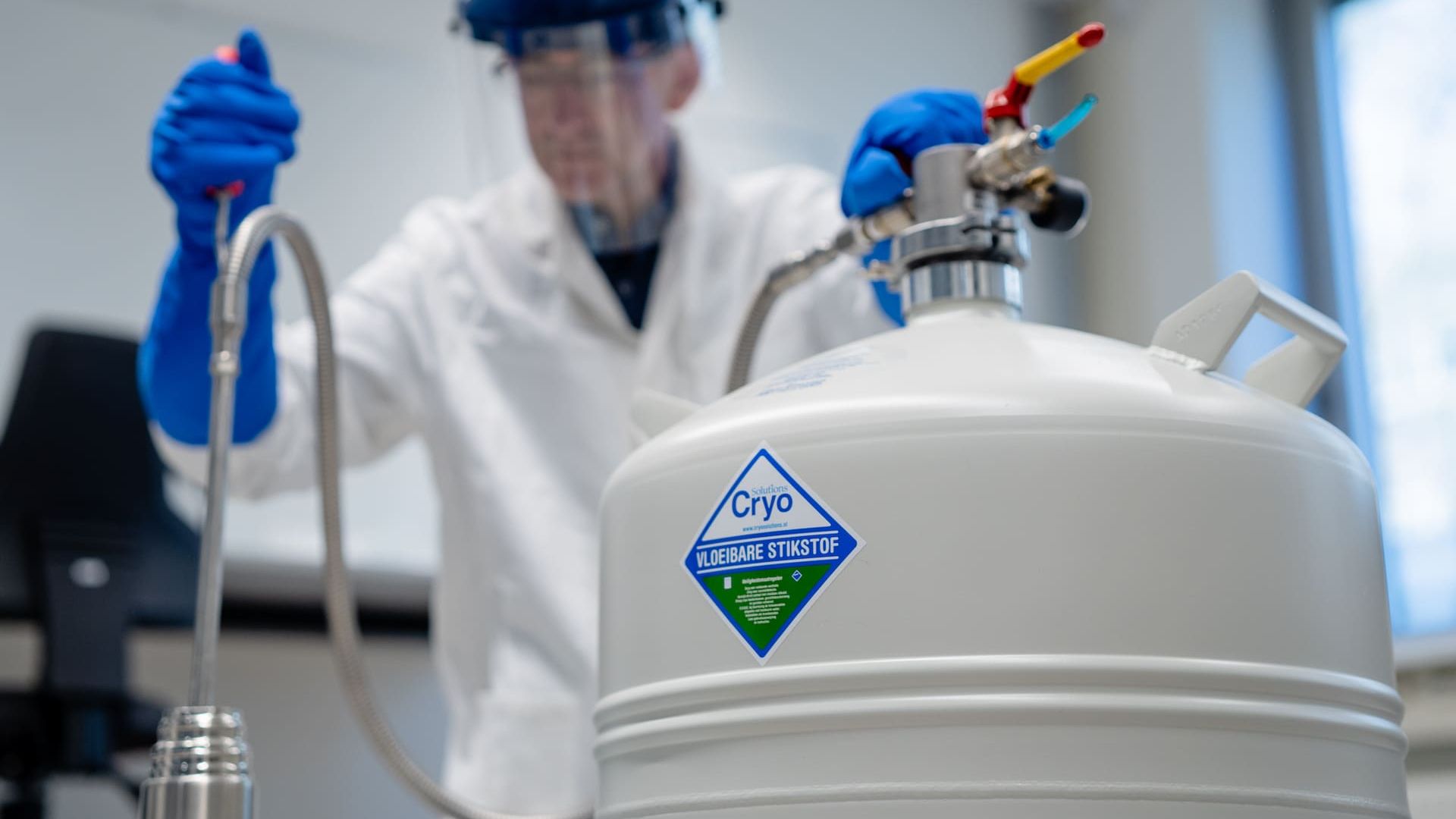
Achieving temperatures this low calls for sophisticated methods. Techniques such as specialized refrigeration cycles and cryopumps play crucial roles in dissipating heat from substances. The process often involves liquefying gases with low boiling points, like helium or nitrogen.
One significant challenge is creating effective thermal insulation to prevent unwanted heat absorption from the surroundings. Additionally, materials at these conditions can morph, becoming fragile or exhibiting unexpected behaviors, which demands careful examination and tailored approaches.
Driven by Discovery and Innovation
The endeavor for ultra-low temperatures is not purely academic. Such pursuits offer prospects of huge breakthroughs in technology and new scientific insights. Near absolute zero, phenomena like superconductivity and superfluidity occur, with wide-ranging utility in energy, computing, and precision measurement.
Furthermore, these conditions allow an unprecedented understanding of material properties, providing a testbed for fundamental physics theories. It's here that macro and micro worlds, driving innovation, meet.
Cold Frontiers: The Role of Cryogenics in Space Exploration
Cryogenics is not just a laboratory experiment; it is a pivotal force in our quest to explore outer space. By mastering extreme chill, new frontiers in space technology are opened, enhancing our ability to explore the cosmos.
Propelling Space Missions with Cold
The use of cryogenics in space begins with rocket propulsion. Spaceships often rely on cryogenic propellants such as liquid hydrogen and oxygen. These substances are utilized due to their considerable energy efficiency, vital for overcoming Earth's gravitational pull.
Liquid hydrogen, combined with an oxidizer, offers immense thrust potential. Its lightness reduces overall rocket mass, maximizing payload capacity. Meanwhile, liquid oxygen ensures rapid combustion, crucial in the vacuum of space where naturally occurring oxidizers are absent.
Yet, the management of these cold propellants poses engineering and operational challenges. With very low boiling points, they are prone to evaporation, demanding innovative engineering solutions like advanced insulations and precise temperature control to minimize losses.
Sensitive Instrumentation and Observation
Space missions often depend on instruments that require ultra-cold conditions to achieve precision. Scientific gear aboard satellites and space telescopes harness cryogenic cooling to reduce thermal noise, thus enhancing signal detection.
Infrared observation tools particularly benefit, as cool detectors minimize self-emission of infrared radiation, unveiling faint celestial bodies and phenomena. Cryogenically maintained devices have proven essential for hunting exoplanets, detecting even the smallest signals from distant worlds through delicate calibration.
Advanced sensors, be they for cosmic observation or Earth monitoring, also see performance boosts from cryogenic methods, which help fine-tune measurements and increase their overall sensitivity.
Sustaining Deep-Space Exploration
Besides propellant technology and device cooling, cryogenics is central to long-duration missions. Life support systems require cryogenically stored gases like oxygen to uphold human survival across extended cosmic sojourns.
Additionally, preserving samples gathered from other celestial bodies in space involves keeping them at cryogenic temperatures. This ensures their integrity until return missions can analyze them on Earth. Such practices preserve vital information and expand our broader understanding of the solar system.
The upcoming frontiers in space exploration will increasingly rely on cryogenics, suggesting that future missions may use these technologies to extend the scope and sustainability of interstellar discoveries.
Liquid Magic: Unveiling the Wonders of Superfluids
In the diverse tapestry of phenomena observed in the coldest realms of nature, superfluid helium holds a special place. This unique substance, when cooled to near absolute zero, exhibits qualities that seem to defy classical understanding.
Exploring Unique Properties
Superfluid helium’s most notable trait is its ability to flow without any internal friction. This frictionless movement allows it to travel even through the tiniest of spaces, never slowing or losing energy—this defiance of expected fluid behavior stems from the quantum-mechanical principles that govern its existence at extreme temperatures. Engineers and researchers harness these properties to cool top-tier superconductors and high-performance quantum devices.
Phenomena of the Superfluid Universe
Some truly remarkable occurrences arise from superfluid behavior. The fountain effect, where the fluid spontaneously escapes through small openings, mirrors an ethereal fountain. Likewise, film creep demonstrates the liquid's uncanny ability to climb elusively over surfaces, defying gravity.
These phenomena do more than challenge textbook physics—they demonstrate the surprising nature of quantum fluids, suggesting new pathways for technological advancements across various domains.
Impacts in Computing and Detection
In quantum computing, the cold of superfluid helium is invaluable—it helps maintain the coherence and stability needed for accurate quantum operations. The fluid's low temperatures make it vital for highly sensitive detectors that function optimally only when free from thermal disturbances.
By enabling enhanced functionality in cutting-edge devices, superfluid helium contributes fundamentally to the advance of science, granting deeper insights into the fabric of reality itself.
Cryogenics for a Sustainable Future: Energy and Environmental Implications
As the world grapples with the demands of sustainable energy, cryogenics offers profound solutions by enhancing current capabilities while paving the path for future innovations.
Enhancing Energy Efficiency
Cryogenic technology supports the storage and performance of superconducting materials and gases crucial in energy applications. By enabling practically resistance-free energy transmission, cryogenics drastically improves efficiencies which translate into reduced energy costs and better resource utilization.
Furthermore, cryogenics aids in the efficient storage and transfer of gases used in power generation, potentially decreasing greenhouse emissions by optimizing industrial operations.
Application in Clean Energy
The ability to manipulate temperatures impacts clean energy technologies, fostering more sustainable industrial practices. By implementing cryogenic methods, industries achieve significant reductions in carbon footprints, aligning with global calls for cleaner energy production.
Recent advancements indicate the potential integration of cryogenic elements into the renewable energy sector, like wind turbines or solar collectors, futuristically expanding their applicability and effectiveness.
Supporting Environmental Goals
Cryogenics is aligned with broader technological and ecological movements aiming at sustainable planet management. With its capacity to enhance storage and efficiency, cryogenics underpins key segments of sustainable infrastructure development, offering a more environmentally harmonious synergy.
The future, steered by scientific insight and needs for ecological sustenance, will likely see cryogenics become fundamental in technologies that ensure harmony between growth and nature.
The world of cryogenics is dynamically broadening its horizons—from revolutionizing scientific paradigms to supporting sustainable planetary frameworks, setting course for continued discovery and unparalleled innovation.
Q&A
-
What is cryogenics and how is it applied in space technology?
Cryogenics is the study of the production and effects of very low temperatures. In space technology, cryogenics is crucial for cooling instruments on telescopes and satellites to enhance their sensitivity and accuracy. It is also used in the storage and handling of propellants in liquid form for rockets, ensuring they remain in a stable state for efficient propulsion.
-
How does superfluid helium contribute to advancements in low-temperature physics?
Superfluid helium, particularly helium-4, exhibits unique properties that are essential in the study of low-temperature physics. At temperatures close to absolute zero, it behaves as a superfluid, meaning it can flow without viscosity. This property allows researchers to explore quantum mechanical effects on a macroscopic scale, leading to advancements in understanding quantum turbulence and other phenomena.
-
What is the significance of reaching absolute zero in quantum cooling experiments?
Reaching absolute zero, or as close to it as possible, is significant because it allows scientists to observe quantum behaviors that are otherwise hidden at higher temperatures. At these extreme conditions, atoms slow down significantly, enabling precise measurements of quantum states and facilitating the development of new technologies such as quantum computers.
-
How does cryopreservation benefit medical and biological research?
Cryopreservation involves cooling cells, tissues, or any biological constructs to very low temperatures to halt all biological activity and preserve them for future use. This technique is vital for preserving genetic material, such as sperm, eggs, and embryos, for assisted reproduction technologies. Additionally, it aids in the conservation of endangered species and in the long-term storage of blood and bone marrow for transplantation.
-
In what ways does quantum cooling differ from traditional cooling methods?
Quantum cooling involves techniques that exploit quantum mechanical properties to achieve temperatures near absolute zero, unlike traditional methods that rely on mechanical or chemical processes. Quantum cooling often uses laser cooling or magnetic trapping to manipulate atomic motion at a quantum level, achieving far lower temperatures than conventional cooling methods, which is essential for experiments in quantum computing and superconductivity research.