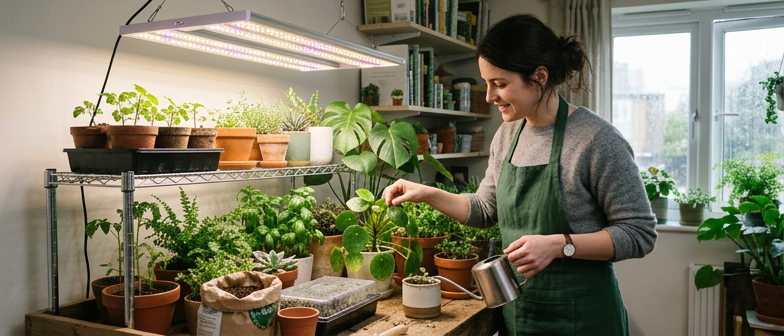
Why Light Matters for Plant Growth
Light is the basic energy source that drives almost everything a plant does, so understanding a few plant growth light basics is one of the most useful pieces of home gardening science. Through photosynthesis, plants capture light and convert it into chemical energy, which they use to build leaves, roots, flowers, and fruits. Without enough suitable light, a plant cannot make the food it needs, even if water and nutrients are available, and the result is usually slow growth, weak stems, and pale foliage. Thinking about light in simple terms like brightness, duration, and direction is already a practical way to apply science at home and explains why some plants thrive on a windowsill and others struggle in a shaded corner.
For home gardeners, treating light as a measurable resource rather than a vague background condition makes everyday decisions more reliable and less based on guesswork. Different species evolved under very different light environments, so each plant has a characteristic range of light it can use efficiently. Matching those needs to the light available in your home sits at the heart of basic, science‑minded indoor gardening. By noticing how direct sun, bright shade, or filtered daylight affect a plant’s color, posture, and rate of new growth, you start to see light as the main environmental factor that sets the limits on how well plants can grow indoors.
Sunlight and Photosynthesis in Simple Terms
Plants use light as a basic energy source, and photosynthesis is the chemical process that turns that light into food. Leaves take in carbon dioxide from the air and water from the roots, then use light energy to build sugars that fuel growth. This is why sunlight is central to plant growth light basics: without enough usable light, a plant cannot make enough energy to maintain healthy leaves, roots, and stems. From a home gardening science basics point of view, you can think of each leaf as a tiny solar panel. The green pigment chlorophyll absorbs mainly blue and red wavelengths of light, which are most effective for photosynthesis, while much of the green light is reflected, making leaves look green to our eyes.
Beyond color, the intensity and duration of light also matter. Intensity describes how bright the light is at the leaf surface, and higher light levels generally allow sun-loving plants to photosynthesize more quickly, up to a point. Duration refers to how many hours of light a plant receives each day, which affects both energy production and natural rhythms like flowering and seasonal growth patterns. When you notice how sunlight moves across a room and how long it reaches your plants, you are already using simple garden science. By matching a plant’s needs for spectrum, brightness, and day length with the light it actually receives, you help it run photosynthesis efficiently and grow in a steady, predictable way.
| Light Factor | Typical Indoor Situation | Common Plant Response | Simple Adjustment Tip |
|---|---|---|---|
| High intensity, long duration | Bright, unobstructed window | Compact growth, sturdy stems | Shift delicate plants slightly away from glass |
| Medium intensity, moderate duration | Bright room, plants near window | Balanced growth, steady leaf production | Use this area for many foliage houseplants |
| Low intensity, short duration | Far from windows or shaded corner | Stretched stems, sparse foliage | Move closer to light or choose shade-tolerant species |
| Moderate intensity, changing duration | Spot with sun only part of the day | Growth varies with season and day length | Rotate plants and observe leaf color and shape |
Key Light Factors Plants Respond To
When home gardeners look at how sunlight drives photosynthesis, three main light factors matter most: intensity, duration, and spectrum. Intensity is how bright the light actually is on the leaf surface, which influences how quickly a plant can convert light energy into sugars. Duration, often called day length, is the number of hours of usable light a plant receives and helps regulate daily activity and seasonal behavior. Spectrum is the mix of wavelengths in the light; plants rely especially on red and blue bands for efficient photosynthetic reactions, while a broader range supports natural growth patterns and healthy leaf color.
Understanding Indoor Plant Light Needs
Indoor plant light needs are often described as low, medium, or bright, meaning how much usable light reaches the leaves during the day. From a basic home gardening science perspective, low light means a plant can cope several feet from a window, where you can still read but strong shadows appear only near the light source. Medium light is found closer to a window or in a room with large openings, where daylight fills the space for many hours. Bright indoor light usually means being right beside an unobstructed window or under glass, where the sun’s path provides strong, extended illumination, though still weaker than outdoors.
These labels match real spots in a home and should fit the natural growth habits of each species. Many foliage plants from forest understories tolerate lower light and manage well in medium to dimmer zones, but they rarely flower heavily. Plants from open, sunny habitats usually need brighter positions and may grow weak and stretched if the light is not strong enough. Knowing these relationships is part of home gardening science basics, because light influences growth speed, leaf size and color, and overall shape.
Seasonal plant growth patterns add a time element to indoor light planning. In summer, a bright window can deliver long hours of useful light, while in winter the same spot may offer fewer hours and weaker intensity, so many species slow down or rest. A place that works in brighter months may be barely adequate in the darker season, so gardeners often move plants nearer to windows or simply accept reduced growth until days lengthen again.
Seasonal Patterns in Indoor Growth
Even indoors, plants follow seasonal plant growth patterns because daylight length and sun angle change over the year. In winter, shorter, weaker light slows growth, so many houseplants pause or grow slowly even if room temperature stays steady. As days lengthen in spring and summer, growth speeds up, foliage looks fuller, and indoor plant light needs increase again.
These shifts matter for everyday care. In darker months, many plants do better closer to bright windows and with occasional rotation, while you usually water less and avoid heavy pruning because growth is limited. When light increases in spring, you can move plants back from intense light, water more regularly, and do light pruning or repotting to match their renewed growth.
Using Window Direction to Your Advantage
Understanding which direction your windows face is one of the simplest Natural Light Observation Tips for matching indoor light conditions with basic Indoor Plant Light Needs. In the northern hemisphere, south-facing windows usually receive the strongest and longest-lasting sun, often suiting plants that grow in open, bright habitats. East-facing windows get gentle morning light that works well for many foliage plants that prefer moderate brightness. West-facing windows bring stronger afternoon sun and heat, so they may suit sun-tolerant species but can be too harsh for delicate leaves without some distance from the glass. North-facing windows generally provide soft, low-intensity light, better for shade-adapted plants or species that grow slowly and do not need strong illumination.
Window Direction Awareness is only the first step; you also need to watch how light actually behaves in your home. Nearby buildings, trees, roof overhangs, and window size all change the amount and duration of light reaching your plants. Spend a few days noting where direct sun falls, how long it lasts, and how bright the room looks on cloudy days, then group plants by their light preferences, from high-light species close to bright windows to low-light plants set farther back. This observation-based approach helps you make practical choices that support Home Gardening Science Basics in your own space.
Q&A
-
What basic light facts matter most for home plant growth?
Think about brightness on the leaves, hours of useful light each day, and whether it is direct sun or softer, reflected light in the room. -
How does sunlight power photosynthesis in simple terms?
Leaves work like solar panels. Chlorophyll absorbs mainly red and blue light, then uses that energy to turn water and carbon dioxide into sugars for growth. -
How can I tell if indoor plants get enough light?
Check room brightness and plant shape. In medium to bright light you can read easily, and healthy plants have firm stems and good color. Pale, stretched leaves and weak stems mean low light. -
Why is window direction important for indoor light levels?
South-facing windows are usually brightest, east gives gentle morning sun, west can be harsh in late afternoon, and north typically offers soft, low-intensity light. -
How do seasons change indoor plant growth patterns?
Short, dim winter days slow photosynthesis, so many plants rest. In spring and summer, longer, stronger light speeds growth and often increases water and nutrient needs.