Unlocking the Mysteries of Galaxy Formation
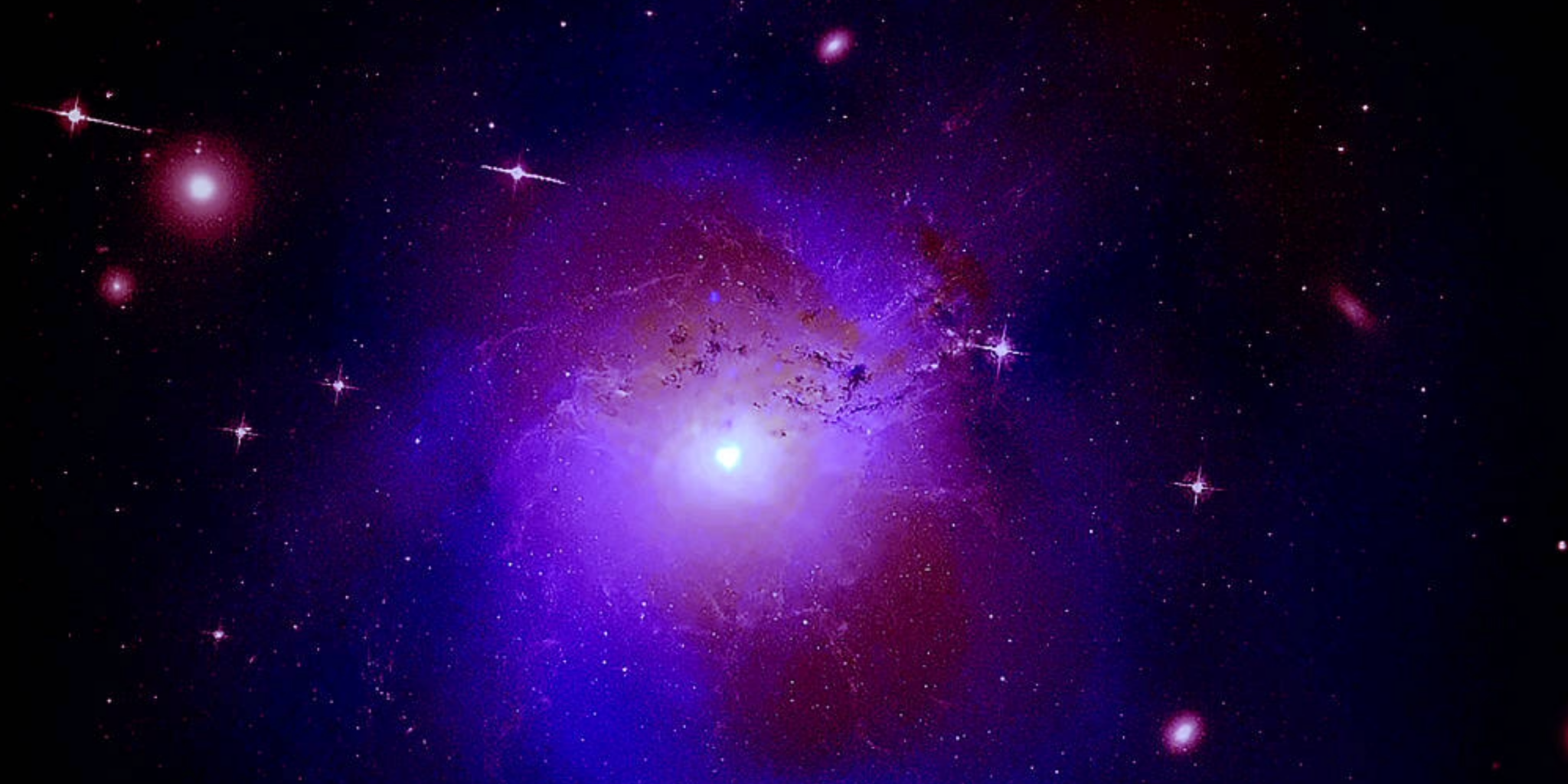
The universe, filled with an astonishing array of galaxies, is a testament to wonders beyond our imagination. At the heart of their formation lies a mysterious component, an invisible mass known as dark matter. This elusive substance composes a major part of the universe’s total mass, operating unseen and unfelt except through its gravitational effects. A cosmic architect, dark matter dictates the layout of galaxies, clustering them into the vast web-like structure we observe today.
The Role of Cosmic Microwave Background
Cosmic Microwave Background (CMB) radiation offers a snapshot of the universe shortly after the Big Bang. Comprising tiny fluctuations in temperature, it provides essential clues about the universe’s large-scale structure. As these fluctuations serve as the seeds for early cosmic structures, understanding them is vital to mapping out dark matter distribution.
Scientists study the anisotropies, or variations, within the CMB to gather insights about the early formation of dark matter halos — the colossal structures of dark matter that host galaxies. The interstellar distribution and gravitational pull of these halos have guided the formation of galaxies over eons. Recent advances in CMB data have honed in on these intricacies, refining models of dark matter and its role in cosmic structure.
The Significance of Dark Matter Halos
Galaxies are not isolated islands in the universe but are instead connected through intergalactic filaments woven by dark matter. Known as dark matter halos, these expansive structures cradle ordinary matter, making them a focal point for galaxy formation research. They provide gravitational attractions necessary for gas and dust to accumulate, ignite star formation, and eventually forge the galaxies we observe.
The gravitational influence of dark matter halos is not merely an initial catalyst. It acts continually as a binding force, aligning with gravitational physics to sustain galaxy integrity over billions of years. This critical relationship poses fascinating questions and offers deeper insights into the unseen matter that governs the universe's skeleton.
From Theoretical Models to Simulations
To unearth the secrets of dark matter, scientists employ a combination of observational data and sophisticated simulations. These simulations, matched with theoretical models, recreate the genesis and evolution of the universe over cosmic time, tracing how dark matter structures interact with visible matter.
A significant leap in this research has been the implementation of large-scale cosmological simulations, which now incorporate detailed aspects of dark matter and its particle physics. By closely matching these simulations to observed phenomena, such as cosmic filaments and cluster distributions, researchers can refine our models of the early universe and the processes shaping its current state.
Gravitational Lensing: A Window into the Invisible
Dark matter not only shapes the universe structurally but also provides unique observational opportunities through the phenomenon of gravitational lensing. When light from distant galaxies bends around massive dark matter structures between the source and observer, it creates a cosmic magnifying effect, making it possible to visualize otherwise invisible phenomena.
Mastering the Art of Bending Light
Gravitational lensing occurs when massive objects, like large dark matter halos, warp spacetime enough to noticeably bend passing light. Observationally, this manifests as distorted images of background objects, intensified in brightness and size. By measuring these distortions, scientists can map out the minute details of dark matter distribution, exposing its hidden influence on universal structure.
Sophisticated lensing surveys enhance our comprehension of dark matter, providing high-resolution mass maps crucial for understanding its spread across the universe. Special attention to these gravitationally lensed snapshots has led to breakthrough observations, strengthening the connection between observational cosmology and theoretical physics.
Probing Dark Matter's Particle Nature
The field of particle physics and cosmology intersects intriguingly through dark matter's nature. Known particles don't account for dark matter, leading to hypotheses about exotic, non-baryonic particles of colossal importance. Researchers explore the possibility that dark matter is composed of WIMPs (Weakly Interacting Massive Particles) or other theoretical candidates like axions.
Robust advancements in detector design and capability have been vital in probing these possibilities. These cutting-edge detectors, often located underground to shield them from cosmic radiation, possess enhanced sensitivity crucial for picking up elusive dark matter interactions. Excitingly, collaborative projects between significant Anglo-American institutions are paving the way for refined detection techniques and methodologies aimed at unveiling dark matter's true identity.
The Future of Dark Matter Research
As cosmological research marches forward, the synthesis of astronomical observations and advancements in particle detection remains critical. The dual quest, involving gravitational lensing insights and particle discovery efforts, progresses us closer to understanding dark matter's enigmatic nature.
Future experiments and telescopic missions promise to provide unprecedented data, refining our understanding and leading us into uncharted territories of the cosmos. Through harnessing innovative technologies and theoretical frameworks, we inch closer to answering the age-old question: of what is space really made, and how does it govern the grand symphony of the universe's evolution?
Question and Answer
-
What role does dark matter play in galaxy formation?
Dark matter acts as the gravitational scaffolding for galaxy formation. It forms dense regions known as dark matter halos, which attract ordinary matter like gas and dust. This matter then cools and condenses within the halos, eventually forming stars and galaxies. By providing the necessary gravitational pull, dark matter influences the spatial distribution and evolution of galaxies, playing a critical role in the large-scale structure of the universe.
-
How does gravitational lensing help us study dark matter?
Gravitational lensing occurs when a massive object, such as a galaxy cluster or a dark matter halo, bends the light from objects behind it. This bending creates magnified and distorted images of background galaxies, allowing astronomers to infer the mass distribution of the lensing object, including the contribution from dark matter. By analyzing these distortions, researchers can map dark matter's distribution and gain insights into its properties and influence on cosmic structures.
-
What is the significance of the Cosmic Microwave Background (CMB) in cosmology?
The Cosmic Microwave Background (CMB) is the afterglow of the Big Bang, providing a snapshot of the universe when it was just 380,000 years old. It contains tiny temperature fluctuations that represent the seeds of structure formation. These fluctuations were amplified by gravity, leading to the formation of galaxies and clusters. Studying the CMB helps cosmologists understand the universe's early conditions, the distribution of dark matter, and the expansion rate of the cosmos.
-
What are particle detectors, and how do they contribute to our understanding of dark matter?
Particle detectors are sophisticated instruments designed to detect and measure the properties of particles, including potential dark matter candidates like WIMPs (Weakly Interacting Massive Particles). These detectors are typically placed underground to shield them from cosmic rays and background noise. By capturing rare interactions between dark matter particles and ordinary matter, these detectors aim to provide direct evidence of dark matter, contributing to our understanding of its fundamental properties and interactions.
-
How is dark energy different from dark matter, and what is its role in cosmology?
Dark energy and dark matter are distinct components of the universe. While dark matter exerts gravitational attraction and helps form cosmic structures, dark energy is a mysterious force driving the accelerated expansion of the universe. It constitutes about 68% of the universe's total energy density. Understanding dark energy is crucial for cosmology as it influences the fate of the universe, impacting its long-term evolution and structure formation dynamics.